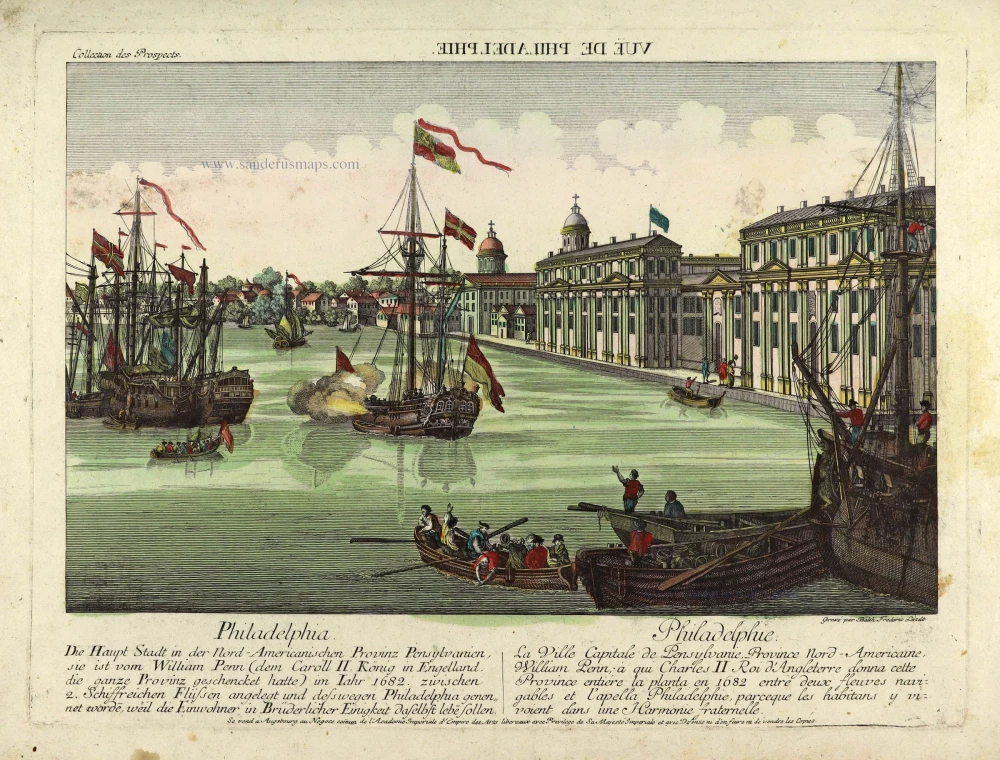
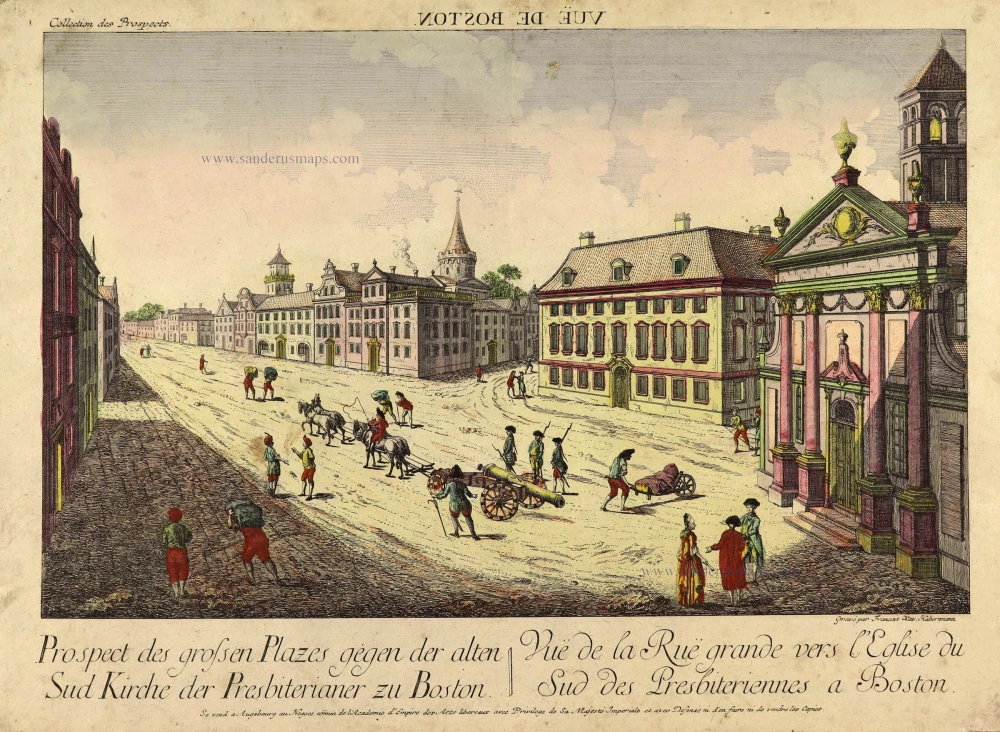
Perspective view of New York. c. 1770
Prints called perspective views, or vues d’optique, were created specifically to be viewed with the perspective glass. These prints used dramatic linear perspectives to maximize the sense of depth. The titles mainly were printed backwards so that they could be read when reflected in the mirror. Perspective views mostly depicted foreign landscapes, street views, architectural interiors, and political or historical events.
Optical View (French: Vue d'optique)
An optical view is a type of 18th-century hand-coloured engraved print to be viewed through a special optical device. It depicts architectural, city, or landscape scenes and is designed to give a strong illusion of depth and perspective when seen through a magnifying lens or viewing box. Characteristic of an optical view is the reversed inscription: The titles or captions were often printed backwards, because the viewing device used a mirror that would flip the image right-side up again. The artists enhanced depth with bold converging lines and bright colours. The optical views were used for popular entertainment and education, a way for people to "travel" visually. They originated in France and England around the 1740s and became fashionable across Europe. They were often sold by travelling print sellers or displayed in fairs and parlours.
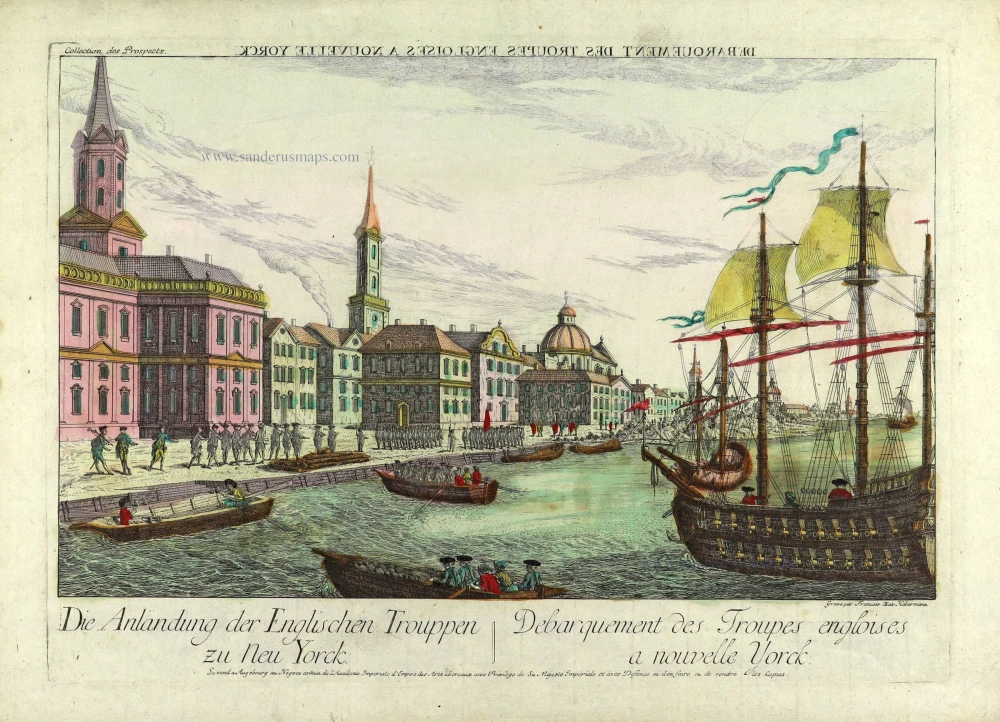
Débarquement des Troupes Engloises a Nouvelle Yorck.
Item Number: 28217 Authenticity Guarantee
Category: Antique maps > America > North America
Old, antique perspective view of New York.
Title: Débarquement des Troupes Engloises a Nouvelle Yorck.
Die Anländung der Englischen Trouppen zu Neu Yorck..
Se vend à Augsburg au Negoce comun de L'Academie Imperiale d'Empire des Arts libereaux avec Privilege de Sa Majesté Imperiale et avec Défense ni d'en faire ni de vendre les Copies.
Gravé par François Xav Habermann.
Copper engraving, printed on paper.
Size to plate marks (not including margins, including title and bottom text): 290 x 405mm (11.42 x 15.94 inches).
Verso: Blank.
Condition: Original coloured, backed with paper, excellent.
Condition Rating: A+.
Separate publication.
Prints called perspective views, or vues d’optique, were created specifically to be viewed with the perspective glass. These prints used dramatic linear perspectives to maximize the sense of depth. The titles mainly were printed backwards so that they could be read when reflected in the mirror. Perspective views mostly depicted foreign landscapes, street views, architectural interiors, and political or historical events.
Optical View (French: Vue d'optique)
An optical view is a type of 18th-century hand-coloured engraved print to be viewed through a special optical device. It depicts architectural, city, or landscape scenes and is designed to give a strong illusion of depth and perspective when seen through a magnifying lens or viewing box. Characteristic of an optical view is the reversed inscription: The titles or captions were often printed backwards, because the viewing device used a mirror that would flip the image right-side up again. The artists enhanced depth with bold converging lines and bright colours. The optical views were used for popular entertainment and education, a way for people to "travel" visually. They originated in France and England around the 1740s and became fashionable across Europe. They were often sold by travelling print sellers or displayed in fairs and parlours.